

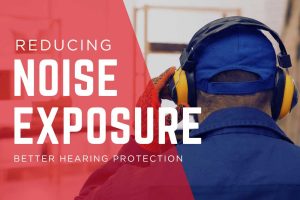
From manufacturing machinery and construction tools to metal fabrication and production lines, workers can spend hours exposed to sounds that gradually damage their hearing. The effects are not always immediately obvious, but prolonged exposure to excessive noise can lead to permanent hearing loss and tinnitus. Hearing protection is an important part of preventing this damage, but simply providing workers with ear plugs or earmuffs is not enough. The equipment must be suitable for the working environment, fitted correctly and maintained properly.
Understanding the different types of hearing protection
There are several types of hearing protection that are commonly found in workplaces, each with their own advantages depending on the task, noise levels and working conditions.
Ear plugs
Ear plugs sit inside the ear canal, reducing the amount of sound reaching the inner ear. Foam ear plugs are commonly used because they are lightweight and can provide effective protection when fitted correctly. Foam plugs should be rolled between clean fingers into a thin cylinder before the ear is gently pulled upwards and backwards. The plug can then be inserted into the ear canal and held in place while it expands. If it does not expand fully or is inserted too shallowly, noise can still reach the ear.
Disposable ear plugs should be replaced as directed by the manufacturer, particularly if they become dirty or damaged. Keeping hands clean when inserting them is equally important, as introducing dirt into the ear canal can cause irritation or infection.
Pre-moulded ear plugs
Unlike foam plugs, pre-moulded ear plugs are already shaped to fit inside the ear canal. They are usually made from flexible materials and may have several flanges to help create a secure seal. Some are attached to a cord, making them easier to retrieve and less likely to be misplaced.
To insert them, workers should gently pull the ear upwards and backwards before positioning the plug in the canal. A slight twisting movement can help achieve a comfortable fit. Reusable models need regular cleaning and should be stored in a clean container when not in use. If the material becomes worn or the plug no longer fits securely, it should be replaced.
Semi-aural devices
Semi-aural devices, sometimes called canal caps, consist of small pods attached to a headband, which sit at the entrance to the ear canal rather than fitting deeply inside it. Their main advantage is convenience. Workers who move regularly between noisy and quieter areas may find them easier to remove than conventional ear plugs.
The pods must sit securely at the ear canal entrance, but even then, their level of protection may be unsuitable for some environments. Employers should check the noise risk assessment and manufacturer’s guidance before selecting them.
Earmuffs
Earmuffs cover the entire outer ear with cushioned cups that reduce the amount of sound reaching the ear. They are available in different designs, including models that attach to safety helmets, making them useful in a range of industrial settings.
For earmuffs to work properly, the cushions must form a close seal around each ear. Glasses, long hair and other equipment can create gaps that allow noise through, so workers should check that their hearing protection fits comfortably alongside their other personal protective equipment.
Earmuffs also need looking after. Cushions can deteriorate over time and headbands may lose tension, reducing the level of protection. Regular inspection, cleaning in line with the manufacturer’s instructions and timely replacement of worn parts will help keep them effective.
When and where should hearing protection be worn?
Different workplaces produce different levels of risk, which is why employers should carry out a suitable noise risk assessment. This helps identify where protection is needed, which equipment is appropriate and whether additional controls are required.
Under the Control of Noise at Work Regulations 2005, when daily or weekly personal noise exposure reaches the lower exposure action value of 80 dB(A) employers must carry out a risk assessment, provide information and training and make hearing protection available.
At the upper exposure action value of 85 dB(A), hearing protection becomes mandatory where other measures cannot reduce exposure sufficiently. Hearing protection zones must be marked and health surveillance should be introduced.
Getting the fit right
Even good quality hearing protection cannot do its job if it is poorly fitted. Employers should explain how each type of equipment works and give workers an opportunity to practise using it. Comfort matters. If protection is uncomfortable or unsuitable for the task, workers may be tempted to remove it.
Workers should check their equipment before use and look for signs of damage, contamination or wear. A simple check, such as cupping the hands over the ears while wearing the protection, may help identify an obvious fitting problem if the noise does not become noticeably quieter. However, this is not a reliable test of protection levels and cannot replace professional fit testing.
What if a worker wears a hearing aid?
Workers who already have hearing loss still need protection from excessive noise, as further exposure can cause additional damage. However, choosing suitable equipment may require extra consideration. For example, earmuffs can interfere with behind-the-ear hearing aids and ear plugs might not be appropriate for everyone. Employers should seek advice from occupational health or hearing specialists to identify suitable solutions.
How employers can reduce noise exposure
Hearing protection is important, but it shouldn’t be the only way of managing noise exposure. Preventing or reducing noise at its source is generally more effective than relying entirely on equipment worn by workers. Protecting hearing requires more than handing out ear plugs at the start of a shift. It relies on understanding the risks, choosing suitable equipment and making sure workers know how to use it. By combining noise controls with correctly fitted and well maintained hearing protection, employers can help prevent avoidable hearing damage and safeguard the long term health of their workforce.