

Why fire safety in the workplace matters
Most go to their workplace without giving much thought to how quickly a small flame can become a major fire. Yet every year across the West Midlands, workplace fires lead to injuries, closures and in some cases, loss of life. Modern workplaces are filled with ignition points, add human error into the equation and the conditions for a fire can emerge far more easily than most people realise.
Beyond the immediate danger to employees and visitors, fires often have long term consequences that continue long after the flames have been extinguished. Premises may become unusable, operations can grind to a halt and reputational damage can affect organisations for years. Smaller businesses are particularly vulnerable because many struggle to recover financially after major fire damage.
Understanding the fire triangle
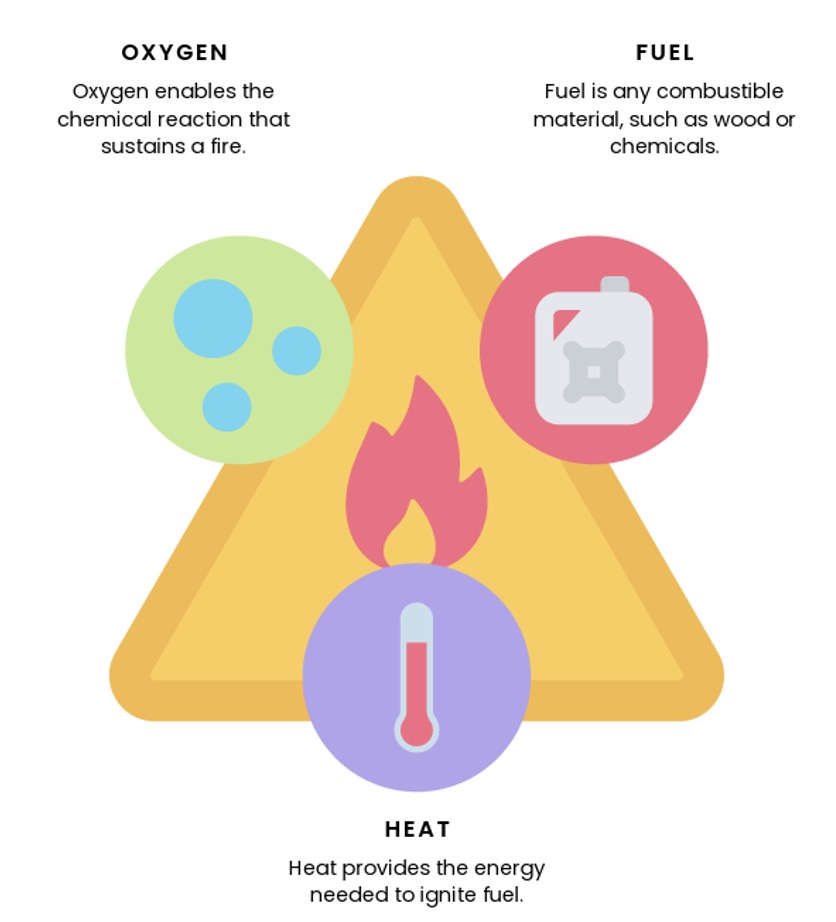
To understand how fires can be prevented, it helps to begin with the science. Fire requires three elements to exist at the same time: heat, fuel and oxygen. This relationship is known as the fire triangle. Remove any one of these three components and a fire cannot survive. Fire suppression systems such as extinguishers or sprinklers work by interrupting one or more parts of the triangle.
The most common causes of workplace fires
Electrical faults are one of the leading causes of workplace fires in the UK. Overloaded sockets, damaged wiring and poorly maintained equipment can generate enough heat to ignite nearby materials. In offices, this often goes unnoticed because electrical infrastructure operates quietly in the background until a failure occurs.
Human behaviour also plays a role. Carelessly discarded smoking materials, unattended cooking equipment and improper storage of flammable substances often contribute to workplace fires. Industrial environments face additional hazards from hot works such as welding and cutting, where sparks can spread rapidly if precautions are inadequate.
Increasingly, lithium-ion batteries are becoming an area of concern. E-bikes, power tools and portable electronics rely heavily on rechargeable battery technology. When damaged or charged incorrectly, these batteries can fail violently and ignite with little warning.
When substances like solvents, fuels or aerosols are kept near ignition sources, or in unsuitable containers, vapours can accumulate and catch fire. Fuel systems using gas, oil or other combustible fuels can cause fires if they malfunction or are poorly maintained.
Deliberate acts of arson are responsible for many fires in the workplace. Prevent against bad actors by securing building access, promoting good housekeeping, installing external lighting and maintaining effective perimeter security.
Fire regulations in the UK
In the UK, workplace fire safety is primarily governed by the Regulatory Reform (Fire Safety) Order 2005 and Fire Safety Act 2021. These legislation place responsibility on what is described as the “responsible person”, usually the employer, building owner or occupier. This individual must identify fire risks, implement safety measures and ensure that employees receive appropriate information and training.
The law requires businesses to carry out regular fire risk assessments and maintain suitable fire detection and warning systems. Escape routes must remain accessible, emergency lighting should function correctly and firefighting equipment must be serviced routinely. Employers are also expected to review safety arrangements whenever significant changes occur within the workplace.
Understanding fire classifications
Not all fires behave in the same way, which is why fires are divided into classifications. Class A fires involve ordinary combustible materials such as wood, paper and textiles. These are among the most common workplace fires. Class B relates to flammable liquids including petrol, paint and solvents. Class C fires involve gases, while Class D concerns combustible metals such as magnesium and aluminium.
Electrical fires present their own dangers because water based extinguishing methods may create electrocution risks. Cooking oil fires are classified separately as Class F, and are especially hazardous because high temperatures can cause flames to spread explosively if handled incorrectly. Understanding these categories matters because extinguishers are designed for specific fire types. Using the wrong extinguisher can worsen the situation rather than control it.
How fires spread
Fire spreads far faster than many people expect. Heat transfers through conduction, convection and radiation. In simple terms, flames can move through direct contact, rising hot air or radiant heat travelling across spaces. Buildings themselves can accelerate this process. Open stairwells may act like chimneys, pulling smoke and heat through multiple floors. Hidden cavities behind walls or ceilings can allow flames to travel unseen. Ventilation systems may unintentionally circulate smoke throughout a premises before occupants are fully aware of the danger. Smoke is often more deadly than the fire itself, which is why containment measures are just as important as suppression systems.
Making workplaces safer
Modern fire safety relies on multiple layers of protection working together rather than a single solution. Smoke detectors provide early warning by identifying airborne particles associated with combustion, while heat detectors respond to rapid temperature increases in environments where smoke may not be immediately detectable. Fire alarms then alert occupants so evacuation procedures can begin without delay.
Sprinkler systems are among the most effective methods of controlling fires before emergency services arrive. Contrary to popular belief, sprinklers do not all activate simultaneously. Individual heads respond to heat in specific areas, helping to limit water damage while containing flames. In larger industrial settings, drenchers and flooding systems may be used to protect high risk areas where rapid suppression is essential.
Compartmentation remains one of the most important principles in fire safety design. Fire-resistant walls, ceilings and doors slow the movement of flames and smoke, buying valuable time for evacuation. Fire doors are particularly effective when kept closed and properly maintained, yet they are frequently wedged open for convenience, undermining their purpose entirely. While airflow is essential in many workplaces, poorly managed ventilation can intensify fire spread. Cavities within walls and ceilings should be sealed appropriately to prevent hidden fire travel.
Buildings also require infrastructure that supports firefighting operations. Risers provide firefighters with access to water supplies on upper floors, while hose reels allow trained personnel to tackle small fires quickly when conditions are safe. Clear fire signage and accessible extinguishers complete the picture. Workers need to understand escape routes instinctively, especially during stressful situations where visibility may be limited.
What to do in the event of a fire
When a fire occurs, speed and clarity matter. The first priority should always be raising the alarm and ensuring people evacuate safely. Staff should move calmly towards designated exits and avoid lifts wherever possible. Attempting to fight a fire should only be considered if the blaze is small, the correct extinguisher is available and there is a safe escape route behind the individual using it. No one should place themselves at unnecessary risk. Once outside, employees should gather at the designated assembly point so managers or fire marshals can account for everyone. Re-entering the building before emergency services declare it safe should never happen under any circumstances.
Carrying out a fire risk assessment
A fire risk assessment is the foundation of fire prevention in the workplace. The process begins with identifying potential hazards, including ignition sources, combustible materials and areas where vulnerable individuals may require additional support during evacuation. Employers must then evaluate who could be harmed and how likely a fire is to occur. Existing control measures should be reviewed and if weaknesses are identified, practical action needs to follow. Assessments should remain active documents rather than static reports completed once and forgotten. Workplaces evolve constantly and fire safety arrangements need to evolve alongside them.
Creating a culture of awareness
Fire safety works best when it becomes part of workplace culture rather than an annual tick-box exercise. Staff who take ownership for fire safety are more likely to report hazards, follow procedures and respond appropriately during emergencies. For employers, prevention is ultimately about attention to detail, small oversights turn manageable incidents into disasters. For organisations across the West Midlands and beyond, investing in fire safety is not simply about complying with regulations, it’s about protecting people, preserving livelihoods and ensuring that everyone can work with greater confidence and security.